
If you’re looking for a simple way to sell digital products online, chances are you’ve come across Payhip.
I’ve been using Payhip for the past four years to sell digital products and online courses. During that time, I’ve explored most of the platform’s features, compared it with alternative solutions, and ultimately made it my primary platform for selling digital products.
In this Payhip review, I’ll share what’s worked well, where I think Payhip falls short, how its pricing compares to other platforms, and why I still use it today.
Want to try Payhip for yourself?
You can start with Payhip’s free plan and access virtually all of the platform’s core features before deciding whether it’s the right fit for your business.
Let’s start with a quick overview of what Payhip is and who it’s best suited for.
What Is Payhip and Who Is It For?
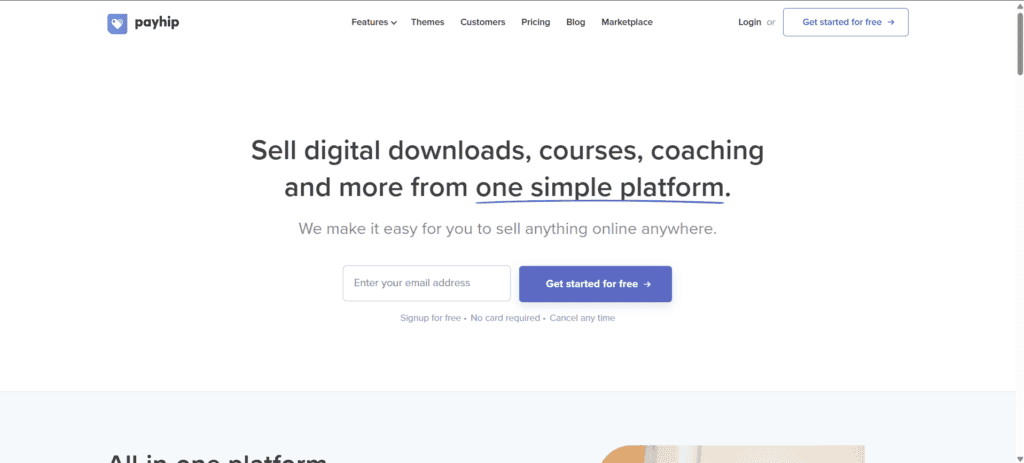
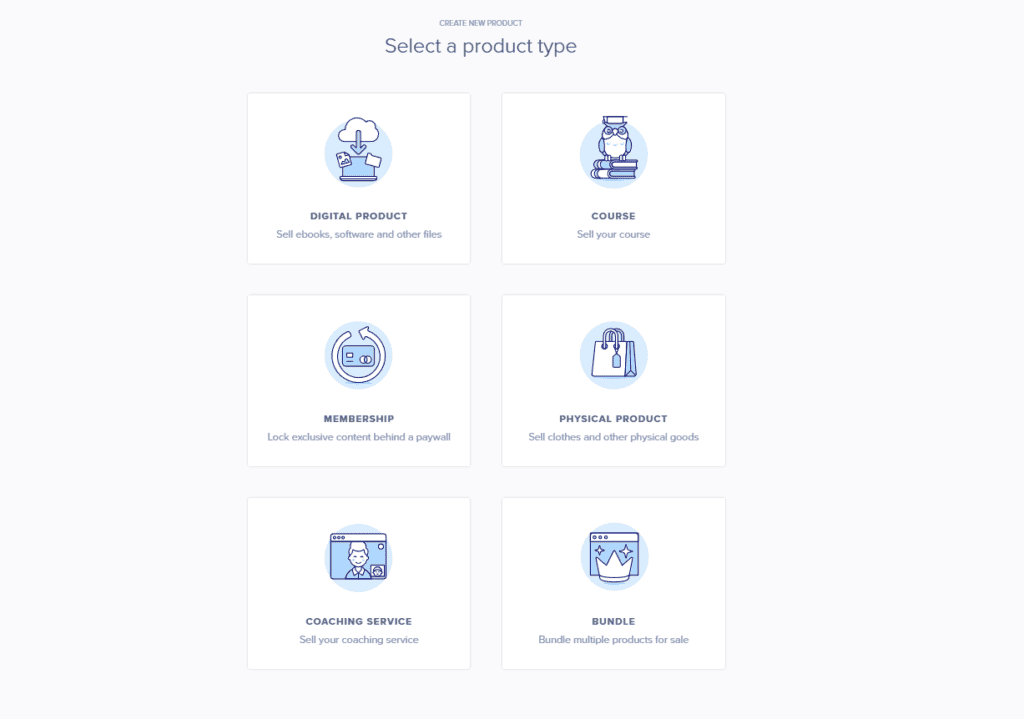
Payhip is an ecommerce platform that allows creators, coaches, freelancers, and small business owners to sell digital products, online courses, memberships, coaching services, and physical products through a single online storefront.
What initially attracted me to Payhip was its simplicity. When I first started looking for a platform to sell digital products, I wanted something that was easy to set up, affordable to run, and didn’t require a lot of technical knowledge. I still think that’s one of its biggest strengths.
Unlike more complex ecommerce platforms, Payhip is designed to help creators start selling quickly. You can create a storefront, upload products, connect your payment processor, and start accepting orders without spending days configuring your store.
What Can You Sell on Payhip?
One thing I like about Payhip is that it supports several different business models.
Personally, I’ve primarily used it to sell digital products and online courses. Some of the products I’ve sold through Payhip include:
- Planners
- Workbooks
- Templates
- Guides
- Online courses
However, the platform can support much more than that.
You can also sell:
- Digital downloads
- Memberships
- Coaching services
- Physical products
- Subscription-based content
This flexibility means you can start with a single product and expand your offerings over time without having to move to a different platform.
Who Is Payhip Best For?
In my experience, Payhip is best suited to people who want to focus on creating and selling products rather than managing technology.
This includes:
Content Creators
Bloggers, YouTubers, podcasters, and content creators can use Payhip to monetize their audience with digital products, courses, and memberships.
Coaches and Consultants
The coaching functionality is surprisingly straightforward to use. If you offer one-to-one coaching, consulting sessions, or group programs, Payhip provides a simple way to sell those services alongside your digital products.
Freelancers
Freelancers can package their expertise into templates, guides, frameworks, and other digital resources that generate revenue beyond client work.
Small Business Owners
Small businesses can use Payhip to sell educational resources, customer toolkits, training materials, and other digital products without investing in a more expensive ecommerce platform.
First-Time Digital Product Sellers
If you’re launching your first digital product, Payhip is one of the easiest platforms I’ve used. The learning curve is minimal, and you can get a store up and running relatively quickly.
Who Might Need a Different Platform?
While Payhip works well for creators and small businesses, it won’t be the perfect fit for everyone.
If you need:
- Extensive storefront customization
- Complex ecommerce functionality
- Large inventory management systems
- Enterprise-level features
then a platform like Shopify may be a better long-term solution.
That said, if your primary goal is to sell digital products, courses, memberships, or coaching services, I’ve found that Payhip offers more than enough functionality without introducing unnecessary complexity.
How I Ended Up Using Payhip
Interestingly, I didn’t start using Payhip straight away.
I originally signed up, created an account, and even started setting up a product. Then, for whatever reason, I never really followed through with it and ended up using another platform instead.
For about a year, my Payhip account sat there largely unused.
The turning point came when I joined a challenge focused on selling digital products with Payhip. As I worked through the challenge, I started exploring the platform properly and realised just how much functionality it offered.
My reaction was basically:
“Why am I not using this already?”
I already had an account. I’d already done some of the setup work. Yet I hadn’t taken the time to understand what the platform could actually do.
At the time, I was using another platform that charged a 10% transaction fee on sales. When I compared that to Payhip’s 5% transaction fee on the free plan and looked at the features available, the decision became much easier.
The ability to sell both digital products and courses from the same platform was a major advantage, and the fact that Payhip helped handle digital sales tax and VAT requirements solved another problem I didn’t really want to deal with myself.
That combination of lower fees, built-in course functionality, and tax handling ultimately convinced me to move everything across.
Since then, Payhip has become my primary platform for selling digital products online.
My Take
I think its biggest appeal is that it solves a very specific problem: helping creators sell products online without making the process more complicated than it needs to be.
There are certainly platforms with more features, but for many creators and small business owners, simplicity is often the more valuable feature.
Payhip Review: Key Features and What You Can Sell
One of the reasons I’ve continued using Payhip is that it supports a wide range of digital business models without adding unnecessary complexity.
Whether you’re selling digital downloads, online courses, memberships, coaching services, or even physical products, everything can be managed from the same platform.
Here are the features that matter most and how creators typically use them.
Digital Product Delivery
The feature I’ve used most is Payhip’s digital product delivery system.
Over the years, I’ve sold a range of digital products through Payhip, including:
- Planners
- Workbooks
- Templates
- Guides
One thing I’ve always appreciated is how straightforward the process is. Once a customer completes their purchase, Payhip automatically delivers the product without any manual work on my part.
That may sound like a basic feature, but when you’re selling products consistently, having a reliable delivery system saves a significant amount of time and reduces customer support issues.
I’ve found the product upload process equally simple. Adding a new product, updating an existing product, or changing pricing takes only a few minutes.
Online Courses
In addition to digital downloads, I’ve also used Payhip to sell online courses.
What I like about the course functionality is that it’s built directly into the platform. I don’t need separate software for hosting courses and another platform for selling them.
For creators who want to package their expertise into educational products, Payhip provides:
- Course hosting
- Student access management
- Lesson organization
- Secure content delivery
Coaching Services
Although digital products and courses have been my primary focus, I’ve also explored Payhip’s coaching functionality.
This is one of those features that doesn’t get talked about very often, but I think it’s surprisingly useful.
The setup process is straightforward, making it easy to create coaching offers alongside your digital products. If you’re a consultant, coach, or service provider, being able to manage products and services from the same platform can simplify your business considerably.

Memberships and Subscriptions
Payhip also allows creators to sell recurring memberships and subscription-based content.
While I haven’t relied on this feature as heavily as digital downloads and courses, it’s a useful option for creators looking to generate recurring revenue through:
- Premium content
- Resource libraries
- Exclusive communities
- Ongoing training
Having these capabilities available means you can expand your business model without migrating to another platform.
The Feature I Value Most: Tax Handling
If there’s one feature that has probably saved me the most headaches over the years, it’s Payhip’s handling of digital product taxes and VAT.
This isn’t the most exciting feature to talk about, which is probably why many reviews barely mention it.
However, when you’re selling digital products internationally, tax compliance can quickly become complicated.
One reason I’ve continued using Payhip is that it helps handle much of this process for you.
Personally, I prefer using platforms that take care of as much of the administrative side of selling as possible. I’d rather spend my time creating products, improving courses, and marketing my business than worrying about tax calculations and compliance requirements.
For me, this has been one of Payhip’s most underrated benefits.
Payment Processing
Payhip integrates with both Stripe and PayPal, making it easy to accept payments from customers around the world.
The setup process is straightforward, and once connected, payments are processed automatically through your chosen provider.
This is another example of what I like about Payhip: it doesn’t try to overcomplicate things.
Overall Feature Assessment
I think Payhip’s greatest strength is its simplicity.
While some competitors offer more advanced features, I’ve found that Payhip includes the features most creators actually need:
- Digital product delivery
- Course hosting
- Coaching services
- Memberships
- Payment processing
- Tax handling
Most importantly, those features are easy to use.
For creators and small business owners who want to spend more time creating and less time managing software, that’s a significant advantage.
Payhip Store Setup: How Easy Is It for Beginners?
One of the main reasons I originally chose Payhip was because I wanted a simple way to start selling digital products online.
Like many creators, I looked at and tried platforms such as Shopify. While Shopify is undoubtedly powerful, it felt like more platform than I actually needed for selling digital downloads and courses. I wasn’t looking to build a large ecommerce store with hundreds of products—I simply wanted a straightforward way to sell my digital products without dealing with unnecessary complexity.
I still believe ease of setup is one of its biggest advantages.
Creating a Payhip Account
Getting started with Payhip is relatively straightforward.
The sign-up process takes only a few minutes, and once your account is created, you’re guided through the basic steps needed to launch your store.
You’ll typically need to:
- Create your account
- Choose your store name
- Add your business details
- Connect your payment processor
Compared to many ecommerce platforms, there are very few technical hurdles involved.
Setting Up Your Storefront
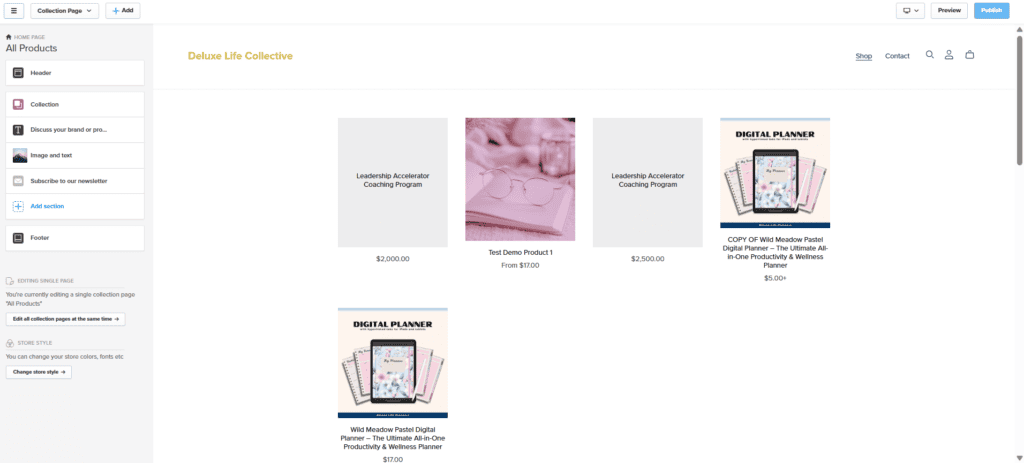
After creating your account, the next step is setting up your storefront.
Payhip hosts your store for you, which means you don’t need to worry about finding separate hosting or managing complicated website configurations.
You can customize:
- Your logo
- Store branding
- Product categories
- Navigation menus
- Store pages
While the design customization isn’t as extensive as Shopify, I actually see this as both a strength and a weakness.
If you want complete control over every design element, Payhip may feel limiting.
However, if your goal is to launch quickly and start selling, the simplicity can be a huge advantage.
Uploading Products
This is where Payhip really shines.
Most of my experience with the platform has involved uploading and managing digital products.
Adding a product is a simple process.
You upload your files, add a description, set a price, and publish the product.
I’ve always found product management intuitive, even when updating existing products or adding new offers.
For beginners, this ease of use removes a lot of the friction that can delay launching a digital product business.
Connecting Payment Methods
Before accepting orders, you’ll need to connect a payment processor.
Payhip supports:
- Stripe
- PayPal
The setup process is straightforward and doesn’t require advanced technical knowledge.
Once connected, customers can begin purchasing products immediately.
Tax and VAT Configuration
One aspect of the setup process that I particularly appreciate is how Payhip handles digital product taxes and VAT.
When you’re selling digital products internationally, tax compliance can quickly become confusing.
For me, this has been one of Payhip’s most valuable features and one of the reasons I’ve continued using the platform for several years.
Launching Your Store
Once your products are uploaded and your payment methods are connected, your store is ready to launch.
This is one of the areas where Payhip stands out.
You don’t need to spend days configuring settings, installing apps, or troubleshooting integrations before you can start selling.
Instead, you can focus on what actually matters:
- Creating products
- Building an audience
- Marketing your offers
- Generating sales
Is Payhip Good for Beginners?
Yes.
In fact, I’d argue that beginners are the audience Payhip serves best.
The platform removes many of the technical barriers that prevent creators from launching digital products. Instead of spending weeks learning ecommerce software, you can focus on validating your product ideas and making your first sales.
If you’re looking for a simple, affordable, and beginner-friendly way to sell digital products online, Payhip is one of the easiest platforms I’ve used.
Payhip Pricing: Is It Worth the Cost?
Pricing is one of the biggest factors when choosing a platform to sell digital products, and after using Payhip for several years, it’s one of the areas where I think the platform stands out.
I’ve tested a number of different platforms over the years, and one thing I’ve noticed is that many platforms advertise a free plan, but there is usually a catch. Often, key features are locked behind paid subscriptions, or the platform charges relatively high transaction fees on every sale.
Payhip takes a different approach.
The Free Plan Is Actually Usable
One of the things I like most about Payhip’s pricing structure is that the free plan gives you access to virtually everything the platform has to offer.
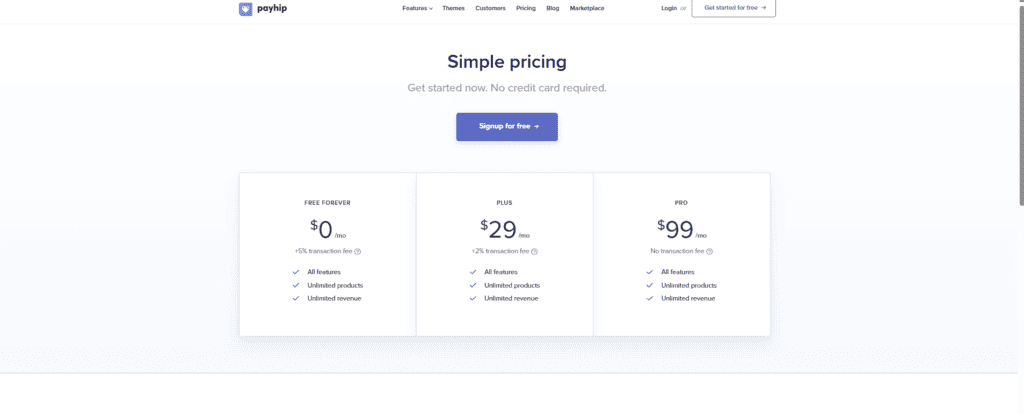
The free plan costs $0 per month and includes:
- Digital products
- Online courses
- Memberships
- Coaching services
- Physical products
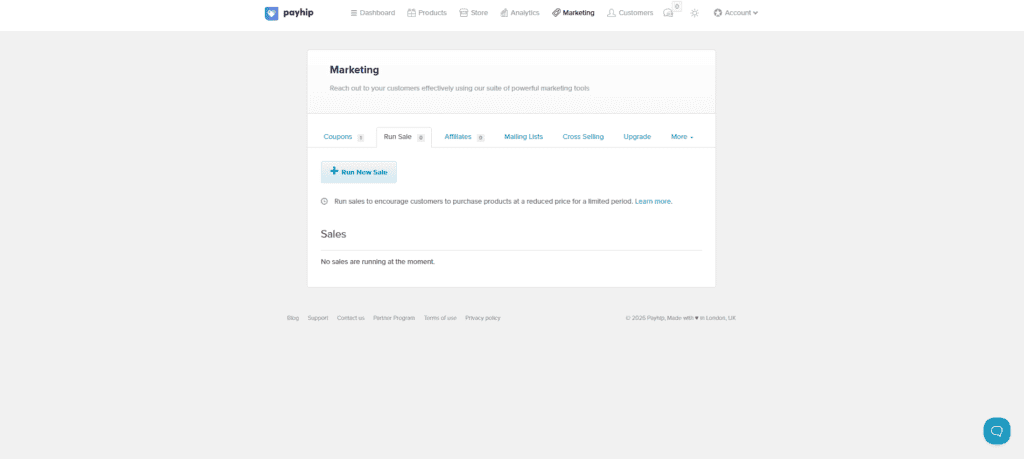
- Affiliate marketing
- Most of the platform’s core functionality
The trade-off is a 5% transaction fee on every sale, which is charged in addition to any Stripe or PayPal processing fees.
Many competing platforms use their free plans as a way to get you through the door before restricting important features behind paid tiers. With Payhip, I never felt like I was being pushed into upgrading simply to access essential functionality.
The only notable exception is video hosting, which is available as an additional paid add-on regardless of which plan you’re on.
Understanding the Transaction Fees
The main thing to understand about Payhip’s pricing is that the transaction fee is separate from your payment processor fees.
For example, if you’re using Stripe or PayPal, you’ll still pay their standard processing fees. The Payhip transaction fee is charged on top of that.
When comparing platforms, this is something many creators overlook.
A platform might advertise a free plan, but once you combine platform fees and payment processing fees, the actual cost can be much higher than expected.
What I’ve found through testing different platforms is that Payhip’s free plan offers a good balance between functionality and cost, especially considering how much you get access to.
When It Makes Sense to Upgrade
One thing I appreciate about Payhip’s pricing model is that it scales with your business.
If you’re just getting started and only making occasional sales, the free plan usually makes the most sense. There’s no monthly subscription to worry about, and you get access to virtually all of the platform’s features.
However, as your sales increase, there comes a point where upgrading becomes the more cost-effective option.
Payhip’s paid plans are:
- Plus: $29/month with a 2% transaction fee
- Pro: $99/month with a 0% transaction fee
As your monthly revenue grows, the savings from lower transaction fees can eventually outweigh the monthly subscription cost.
For example, if you’re generating around $2,000–$3,000 per month in sales, it’s worth running the numbers because upgrading can often reduce your overall costs.
That’s one of the things I like about Payhip’s pricing structure. You can start for free, validate your products, build an audience, and then upgrade when it becomes financially beneficial to do so.
More Cost-Effective Than Shopify for Digital Products
When I first started selling digital products, I also looked at platforms like Shopify.
Shopify is a fantastic ecommerce platform, but for my business, it felt like more platform than I actually needed.
Most of what I sell are digital products and courses. I don’t need advanced inventory management, shipping workflows, or a large ecosystem of apps.
What I needed was a simple and affordable way to sell digital products online.
Payhip gave me that without the additional complexity and expense that often comes with larger ecommerce platforms.
That’s one of the main reasons I’ve continued using it for so long.
The Most Underrated Value: Tax Handling
For me, one of the biggest benefits of Payhip isn’t actually listed in the pricing table.
It’s the fact that the platform helps handle digital sales tax and VAT requirements.
Most new sellers don’t realise tax compliance becomes complicated the moment you start selling internationally.
The fact that Payhip helps manage much of the tax side of selling digital products has saved me time and reduced a lot of potential headaches over the years.
Is Payhip Worth the Cost?
Absolutely.
The free plan is genuinely useful, the upgrade path makes sense, and you’re not constantly being pushed into higher-tier plans to access important features.
Combined with its ease of use, support for multiple product types, and handling of digital sales taxes, Payhip offers excellent value for creators, coaches, freelancers, consultants, and small business owners.
For me, that’s one of the biggest reasons I’ve continued using it for years.
Ready to see if Payhip is right for your business?
One of the things I like most about Payhip is that you can start with the free plan and upgrade only when your sales justify it. If you’re currently researching platforms, the easiest way to evaluate Payhip is to create an account and explore the platform yourself.
→ Create Your Free Payhip Account
Payhip Pros and Cons
Like any platform, Payhip has strengths and weaknesses. After reviewing its features, pricing, and overall usability, here are the advantages and disadvantages that stand out the most.
Payhip Pros
Easy to Use
One of Payhip’s biggest strengths is its simplicity.
The platform is designed to help creators start selling quickly without requiring extensive technical knowledge. Setting up a store, uploading products, connecting payment processors, and launching offers is straightforward, making it particularly appealing to beginners.
Affordable Pricing Structure
Payhip’s pricing model is one of the most creator-friendly I’ve come across.
The free plan provides access to virtually all of the platform’s core functionality, allowing creators to start selling without committing to a monthly subscription from day one.
As your business grows, the paid plans provide a logical upgrade path with lower transaction fees.
Supports Multiple Product Types
Payhip is more flexible than many people realise.
You can sell:
- Digital downloads
- Online courses
- Memberships
- Coaching services
- Physical products
This allows creators to diversify their revenue streams without needing multiple platforms.
Handles Digital Sales Tax and VAT
One of Payhip’s most underrated features is its ability to help manage digital sales tax and VAT requirements.
For creators selling internationally, this can remove a significant administrative burden and simplify compliance compared to managing everything manually.
Built-In Affiliate Management
Payhip includes affiliate marketing functionality without requiring third-party software.
This makes it easier to recruit partners, track referrals, and grow your sales through affiliate marketing.
Beginner-Friendly Store Setup
Compared to many ecommerce platforms, Payhip has a relatively short learning curve.
Creators can focus on building products and attracting customers rather than spending weeks configuring software and integrations.
Payhip Cons
Limited Design Customization
The simplicity that makes Payhip easy to use can also be a limitation.
While you can customise your storefront, the design options aren’t as extensive as platforms such as Shopify.
Businesses that want complete control over every aspect of their website may find the platform restrictive.
Not Built for Large Ecommerce Businesses
Payhip is designed primarily for creators and digital product sellers.
If you’re running a large ecommerce operation with extensive inventory management, advanced logistics, or complex workflows, you’ll likely need a more robust platform.
Video Hosting Costs Extra
Although Payhip includes most of its functionality within its plans, video hosting is typically an additional paid feature.
This isn’t necessarily a major drawback, but it’s worth factoring into your costs if you plan to host a large number of video-based courses directly on the platform.
Fewer Advanced Features Than Enterprise Platforms
Payhip prioritises ease of use over complexity.
For most creators, that’s a benefit. However, businesses that require advanced automation, highly customised customer journeys, or extensive integrations may eventually outgrow the platform.
Pros and Cons at a Glance
Pros
- Easy to use
- Beginner-friendly setup
- Affordable pricing
- Generous free plan
- Supports multiple product types
- Handles VAT and digital sales tax
- Built-in affiliate management
- Fast store setup
Cons
- Limited design customisation
- Not ideal for large ecommerce stores
- Video hosting costs extra
- Fewer advanced features than some competitors
Overall Assessment
For creators, coaches, freelancers, consultants, and small business owners, the advantages of Payhip generally outweigh its limitations.
The platform focuses on helping users sell digital products with as little friction as possible. While it may not offer the same level of flexibility as larger ecommerce platforms, its simplicity, affordability, and ease of use are exactly what make it such an attractive option for many creators.
Payhip vs Other Digital Product Platforms
The most common question I get about Payhip is whether it’s better than the alternatives. Having used several platforms over the years, here’s my honest take on each one.
Payhip vs Shopify
Shopify is powerful, endlessly customisable, and built to scale. It’s also overkill for most digital product sellers. When you’re selling downloads, courses, or memberships, you don’t need a platform designed for physical product catalogues with hundreds of SKUs — you’ll end up paying for complexity you’ll never actually use. Payhip gets you to the same destination with a fraction of the setup time and ongoing cost. Shopify wins if you’re building a large ecommerce business with physical products. For digital-first creators, Payhip is the smarter starting point.
Payhip vs Gumroad
Both platforms are built for creators and both make selling digital products straightforward. The difference is in what you get for free. Payhip’s free plan includes course hosting, membership functionality, and affiliate marketing — features Gumroad either doesn’t offer or puts behind a paid tier. If you want room to grow without immediately upgrading your tools, Payhip gives you more headroom from day one.
Payhip vs Podia
Podia is a solid platform, particularly if courses and communities are your main focus. The catch is that their entry-level pricing is higher, which matters when you’re still validating your ideas. Payhip’s free plan lets you launch and start making sales before spending a penny on software. Once you’ve got consistent revenue and a growing course library, Podia is worth a look. Until then, Payhip makes more financial sense.
Payhip vs Sellfy
Sellfy and Payhip are the most similar of the bunch — both lean, creator-focused, and designed to keep things simple. The difference is that Sellfy’s pricing puts you on a paid plan from the start. Payhip gives you the same core functionality for free and only charges a transaction fee when you actually make a sale. For a new seller, that’s a much lower-risk way to get started. Payhip wins on value at entry level, full stop.
The Bottom Line
Most creators use a fraction of the features available on any platform. The real question isn’t which platform has the longest feature list — it’s which one will help you launch and keep going without becoming a part-time job to manage. For selling digital products, courses, memberships, and coaching services, Payhip does exactly that.
How Payhip Fits Into a Small Business Marketing Stack
Payhip’s primary role is simple: it helps you sell digital products, courses, memberships, coaching services, and other online offers.
While it includes useful features such as affiliate management, payment processing, and tax handling, it’s not designed to replace every tool in your business. Most creators will still use additional software for email marketing, content creation, SEO, analytics, and customer relationship management.
If you’re building a complete toolkit for growing your business online, check out our guide to the Best Online Marketing Tools for Small Business in 2026, where I cover the other platforms and tools that work alongside Payhip to help attract customers, build an audience, and generate sales.
Who Should Use Payhip?
After using Payhip for several years and comparing it with other digital product platforms, I’ve found that it works best for creators and small business owners who value simplicity over complexity.
If your goal is to start selling digital products without spending weeks learning ecommerce software, Payhip is well worth considering.
Payhip Is a Good Fit If You:
- Want a simple and beginner-friendly platform
- Sell digital products, courses, memberships, or coaching services
- Prefer a low-cost way to get started
- Want access to a genuinely usable free plan
- Don’t want to manage complicated technical setups
- Value having digital sales tax and VAT handled for you
- Need a platform that can grow with your business
One of the things I like most about Payhip is that it removes many of the technical and administrative barriers that stop creators from launching their products.
Instead of spending time configuring software, you can focus on creating products, building an audience, and generating sales.
Payhip May Not Be the Right Fit If You:
- Need extensive storefront customization
- Run a large ecommerce business
- Sell hundreds or thousands of physical products
- Require advanced automation and enterprise-level functionality
- Want complete control over every aspect of your website
In those situations, a platform like Shopify may be a better fit.
My Take
If you’re a creator, freelancer, coach, consultant, or small business owner looking for a straightforward way to sell digital products online, I think Payhip is one of the strongest options available.
Its biggest strengths aren’t flashy features or endless customization options. They’re simplicity, affordability, and the ability to get up and running quickly without creating unnecessary work for yourself.
For many creators, that’s exactly what makes it such a good choice.
Final Verdict: Is Payhip the Best Platform to Sell Digital Products in 2026?
I still think it’s one of the best platforms available for creators and small business owners who want to sell digital products online.
That’s not because it has the most features or the most advanced customization options. In fact, there are plenty of platforms that offer more flexibility and functionality.
What Payhip does exceptionally well is keep things simple.
If you’re selling digital products, courses, memberships, or coaching services, you probably don’t need a complicated ecommerce platform. You need a platform that allows you to upload products, accept payments, deliver purchases to customers, and manage your business without creating additional work.
That’s where Payhip excels.
One of the biggest reasons I’ve continued using the platform is that it provides everything I need without unnecessary complexity. The setup process is straightforward, the pricing is reasonable, and the free plan is genuinely useful rather than feeling like a restricted trial.
I also think Payhip’s handling of digital sales tax and VAT deserves more attention than it typically gets. For creators selling internationally, this can remove a significant administrative burden and make running a digital product business much easier.
Who I Recommend Payhip For
Payhip is a great fit for:
- Creators
- Bloggers
- Freelancers
- Coaches
- Consultants
- Course creators
- Small business owners
particularly those who want a simple and cost-effective way to sell digital products online.
Who Should Consider Alternatives?
If you need:
- Advanced ecommerce functionality
- Extensive storefront customization
- Complex inventory management
- Enterprise-level features
then a platform like Shopify may be a better fit.
However, many creators don’t actually need that level of complexity.
My Final Take
If I were starting over today and needed a platform to sell digital products, Payhip would still be at the top of my shortlist.
It’s easy to use, reasonably priced, beginner-friendly, and includes features that many creators don’t realise they’ll need until they’re already selling—such as VAT and digital sales tax handling.
For most creators looking to sell digital products online, that’s exactly what makes it such a strong choice.
Next Steps
If you’re considering Payhip, my recommendation is simple: start with the free plan.
It gives you access to virtually everything the platform offers, allowing you to test your products, make sales, and determine whether the platform is the right fit before committing to a paid subscription.
And if you’re building out the rest of your business toolkit, be sure to check out our guide to the Best Online Marketing Tools for Small Business in 2026, where I cover other tools that can help you attract customers, grow your audience, and scale your online business.
Ready to Start Selling Digital Products?
If you’re looking for a simple, affordable platform that can handle digital products, courses, memberships, coaching services, and even digital sales taxes, Payhip remains one of the strongest options I’ve found.
The best way to decide whether it’s right for your business is to try it yourself.
→ Start with Payhip’s Free Plan and Launch Your First Product Today
Frequently Asked Questions
Yes, Payhip is a legitimate ecommerce platform used by creators, coaches, consultants, and small business owners around the world to sell digital products, courses, memberships, and services online.
The platform has been operating for years and integrates with trusted payment processors such as Stripe and PayPal, allowing sellers to accept payments securely.
Yes. One of Payhip’s biggest strengths is its beginner-friendly design.
New users can create a store, upload products, connect payment methods, and begin selling without technical expertise or coding knowledge. The free plan also makes it easy to test ideas before committing to a paid subscription.
For first-time digital product sellers, Payhip is one of the easiest platforms to learn.
Payhip supports a wide variety of products and services, including:
- Ebooks
- Templates
- Printables
- Digital downloads
- Online courses
- Memberships
- Coaching services
- Physical products
This flexibility allows creators to build multiple revenue streams from a single platform.
Yes, many creators generate revenue through Payhip.
However, success depends on factors such as:
- Product quality
- Market demand
- Audience size
- Marketing strategy
- Pricing
- Customer experience
Payhip provides the infrastructure needed to sell products, but creators are still responsible for attracting customers and creating valuable offers.
Payhip includes tools that help automate aspects of VAT collection and tax compliance for eligible transactions.
This can simplify the process of selling digital products internationally and reduce administrative workload for creators.
Because tax requirements vary by jurisdiction, sellers should still seek professional advice regarding their specific obligations.
Payhip has three plans:
- Free — $0/month with a 5% transaction fee on every sale
- Plus — $29/month with a 2% transaction fee
- Pro — $99/month with 0% transaction fees
The free plan is where most people start, and honestly it’s where I’d tell you to start too. You only pay when you make a sale, which means zero risk while you’re finding your feet.
The maths on upgrading to Plus starts to work in your favour once you’re consistently bringing in around $2,000–$3,000 a month. At that volume, the monthly fee pays for itself through the savings on transaction fees. Until then, stay on free and keep your overheads low.
Yes.
Payhip includes built-in course functionality that allows creators to:
- Upload lessons
- Organize course content
- Restrict access to paying students
- Deliver educational materials online
For many creators, this eliminates the need for a separate course platform.
Yes.
Payhip supports recurring subscription products, allowing creators to build membership businesses around:
- Premium content
- Exclusive communities
- Educational resources
- Monthly downloads
- Ongoing coaching
Memberships can provide a more predictable source of recurring revenue compared to one-time product sales.
It depends on your needs.
Gumroad is known for its simplicity and ease of use, while Payhip generally offers more functionality through features such as:
- Memberships
- Course hosting
- Affiliate management
- Store customization
Creators planning to build a more comprehensive digital product business often find Payhip offers greater long-term flexibility.
For digital product sellers, often yes.
Payhip is specifically designed for creators and typically requires less setup and maintenance than Shopify.
However, Shopify remains the stronger choice for businesses that require:
- Advanced ecommerce functionality
- Extensive customization
- Large product catalogs
- Enterprise-level scalability
The better platform depends on your business model and growth objectives.
Yes — on the free plan, Payhip charges a 5% transaction fee on every sale you make. On the Plus plan ($29/month) that drops to 2%, and on Pro ($99/month) it goes to 0%.
Worth knowing: those transaction fees are separate from your payment processor fees. Stripe and PayPal both charge their own processing fees on top (typically around 2.9% + $0.30 per transaction, though this varies by country).
So on the free plan, your total deductions per sale are roughly 5% (Payhip) + ~2.9% + $0.30 (processor). Still very reasonable for what you get, especially when you’re starting out and not paying a penny in monthly fees
Most creators can launch a basic Payhip store in less than an hour.
The setup process typically involves:
- Creating an account
- Customizing the storefront
- Uploading products
- Connecting payment processors
- Publishing the store
The exact timeline depends on the number of products being added and the level of customization required.
For most creators, freelancers, coaches, consultants, and small business owners, Payhip continues to offer strong value.
Its combination of:
- Beginner-friendly setup
- Affordable pricing
- Digital product support
- Course hosting
- Membership functionality
- Affiliate management
makes it one of the most practical platforms available for selling digital products online.